Trump Declares “Golden Age” in Longest State of the Union Address
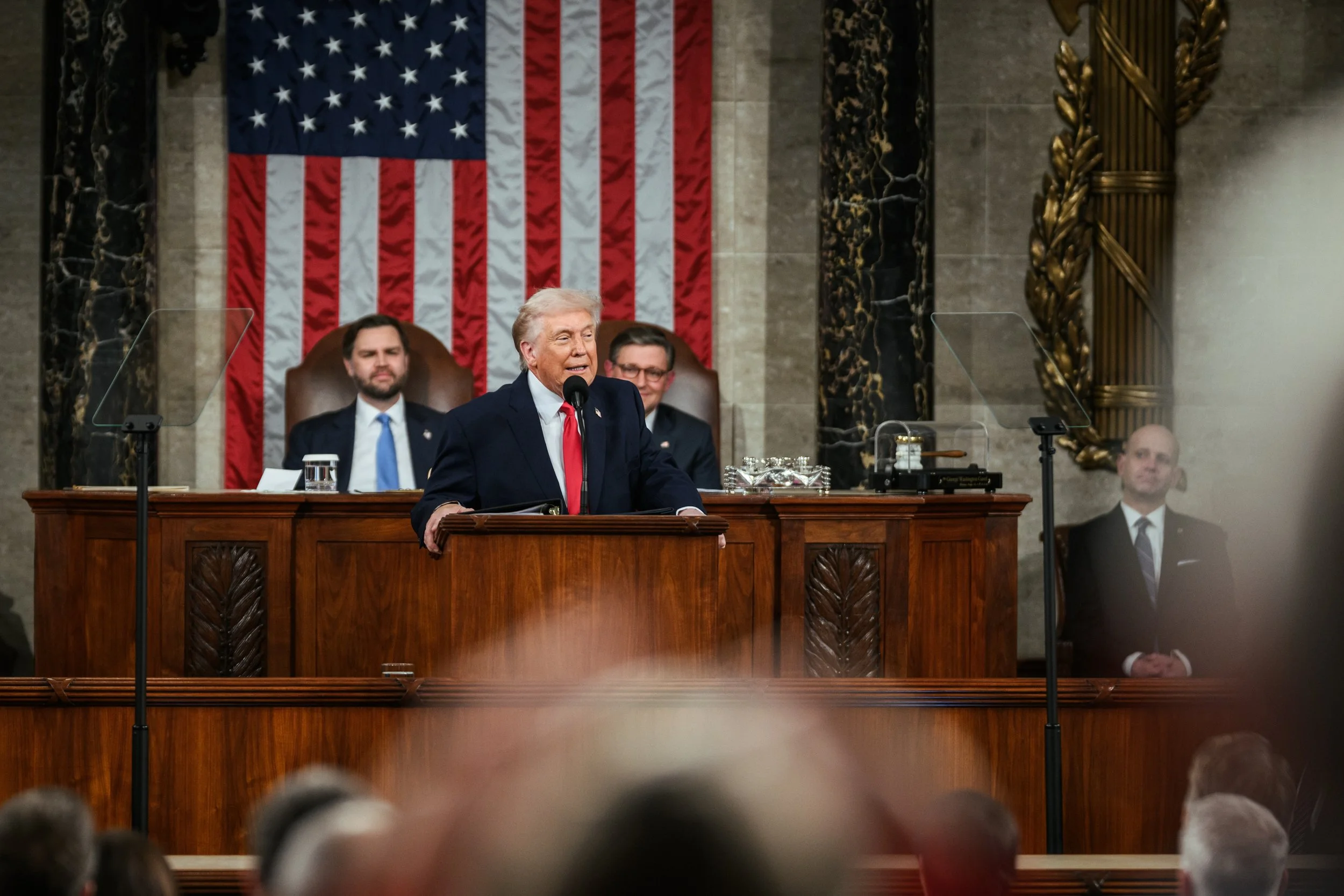
President Donald Trump delivers his State of the Union address, Tuesday, February 24, 2026, on the House floor of the U.S. Capitol in Washington, D.C. (Official White House Photo by Daniel Torok)
In the first State of the Union address of his second term, President Trump’s speech highlighted immigration, tax cuts and trade, offering an optimistic assessment of the country’s direction despite a divided response from lawmakers.
Article by Stella Smith, White House Digital Director
WASHINGTON - On Tuesday, President Trump delivered the first official State of the Union address of his second term, declaring the country had entered a “golden age.” Speaking for one hour and 48 minutes – the longest State of the Union address in history – President Trump portrayed his first year back in office as a sweeping reversal of inflation, illegal immigration, and global instability.
In the House chamber, the president opened with a nod to the nation’s approaching 250th anniversary, framing the moment as one of renewal and historic opportunity. He quickly pivoted to immigration, describing what he called the most secure border in modern times and asserting that “zero illegal aliens” had been admitted to the country over the past nine months. Trump also attributed a significant drop in fentanyl trafficking to intensified enforcement measures.
On the economy, Trump told lawmakers that inflation is “plummeting,” pointing to lower gasoline prices and a resilient stock market as evidence of broader recovery. He outlined initiatives aimed at boosting domestic manufacturing, expanding energy production and reducing regulatory barriers. The president argued that a renewed focus on American industry has restored business confidence and strengthened working families.
Trade and tariff policy emerged as another focal point of the speech. Following a recent Supreme Court decision that limited aspects of his authority to impose certain tariffs, Trump stood by his aggressive tariff agenda, arguing it is critical to safeguarding American industry and jobs. With Supreme Court justices seated just feet away, he openly challenged their ruling, claiming his administration has identified alternative legal pathways to keep some of those tariffs in place.
Domestically, Trump pressed Congress to advance what he described as the “largest tax cuts in American history.” He highlighted proposals to eliminate federal taxes on tips, overtime pay, and Social Security benefits for seniors. The president also introduced “Trump Accounts,” a proposal for new tax-free investment accounts for children aimed at helping families build long-term savings.
Foreign affairs were a key focus of the address, with particular emphasis on escalating tensions with Iran. Trump warned that the United States would not permit Tehran to advance its nuclear program, saying he is prepared to apply additional economic and diplomatic pressure if necessary. His remarks come amid renewed concerns over Iran’s uranium enrichment levels and stalled diplomatic efforts to revive a nuclear agreement.
Despite the largely scripted tone of the evening, this year’s State of the Union was not without disruption. Before the address even began, Rep. Al Green (D-TX) was escorted out of the House chamber after displaying a sign which read “Black people aren’t apes.” The protest was a direct response to a video posted on President Trump’s Truth Social account that depicted former President Barack Obama and former First Lady Michelle Obama as apes – imagery widely condemned as racist. The incident drew swift criticism from Republican lawmakers, who argued the protest was inappropriate for the formal setting.
While several Democratic lawmakers chose to boycott the address altogether, those in attendance appeared visibly restrained, remaining seated for much of the speech as Republicans repeatedly rose in applause. Some Democrats wore pins condemning ICE enforcement actions, while others dressed in white to signal demands for greater transparency surrounding the Epstein files. A handful of vocal interruptions from Democratic representatives punctuated the evening, underscoring the sharply divided political climate that continues to define Washington.
All things considered, for President Trump, this address served as both a policy roadmap and a political statement. He projected confidence in his administration’s direction, repeatedly invoking imagery of a “new golden age” marked by economic revival, border security and renewed American strength on the world stage. Despite this, the divided reaction in the chamber made clear that beneath the president’s optimistic framing, the nation’s partisan divides remain as entrenched as ever.