National Guard Deployment in D.C. Raises Questions of Federal Authority
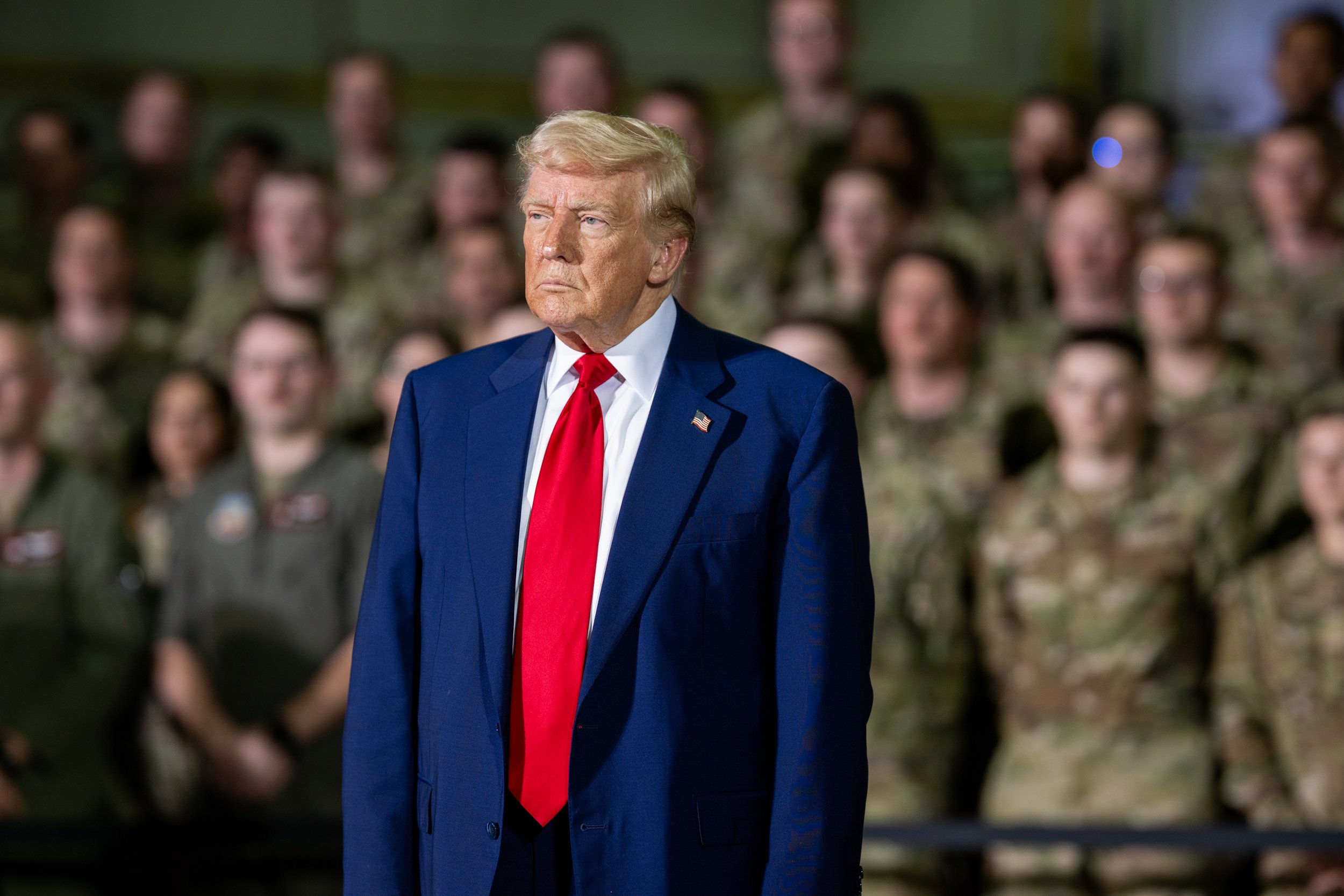
President Donald Trump delivers a speech at Selfridge Air National Guard Base in Harrison Township, Michigan, Tuesday, April 29, 2025.(Official White House Photo by Daniel Torok)
After President Trump invoked a rarely used law to place D.C.’s police under partial federal control, local officials and advocates have cautioned it could set a troubling precedent for federal involvement in city policing.
Article by Stella Smith, White House Digital Director
WASHINGTON - Last week, President Donald Trump deployed hundreds of National Guard troops in Washington, D.C., in what he described as a necessary response to an “out-of-control crime emergency.” This decision marked the first time a president has invoked Section 740 of the D.C. Home Rule Act, a provision which allows the White House to seize temporary control of the city’s police force. The unprecedented move has drawn widespread backlash from local officials and civil liberties advocates who argue that the justification for such sweeping federal intervention was flimsy at best.
Supporters of President Trump’s mandate argue that this measure was long overdue and demonstrates decisive leadership to restore order in the nation’s capital. On August 11th, President Trump announced the creation of the “Making D.C. Safe and Beautiful Task Force,” which mobilized the National Guard to support local policing efforts, staff checkpoints, and conduct joint patrols with federal law enforcement. The White House has cited issues such as juvenile crime, homelessness, and public safety as driving forces behind the deployment, framing the effort as a necessary step to protect both residents and visitors in the capital.
On the other hand, critics contend that this federal action is both unwarranted and an executive overreach into local governance. These opponents cite official governmental statistics which report violent crime in the city has fallen to its lowest level in three decades. Elected officials in Washington, including D.C. Attorney General Brian Schwalb, challenged the legality of this measure, arguing it undermines home-rule authority. Civil liberties advocates have also raised concerns over reports of more than 100 arrests in the first few days of operation, many tied to minor infractions.
A legal battle quickly followed when Attorney General Pam Bondi attempted to appoint DEA Director Terry Cole as an “emergency police commissioner.” The dispute ended in a compromise: D.C. Police Chief Pamela Smith remains in command of the force itself, while a federal liaison was assigned to coordinate joint operations.
This National Guard deployment has also sparked broader debates about the limits of federal authority across the country. Many argue it sets a troubling precedent for federal intervention in local policing. The strongest pushback has come from residents of Washington, who now face armed troops patrolling their streets, checkpoints controlling movement, and an atmosphere of heightened surveillance. The administration’s allies, meanwhile, argue that this show of force is the only way to address crime and homelessness in the capital.
As this situation unfolds, D.C. has become a symbolic battleground over the balance between federal authority and local autonomy. Ultimately, the outcome will shape not only Washington’s security policies but also the future boundaries of federal power in America’s cities.