President Trump’s 250th Army Anniversary Parade Blends Patriotism and Political Theatre
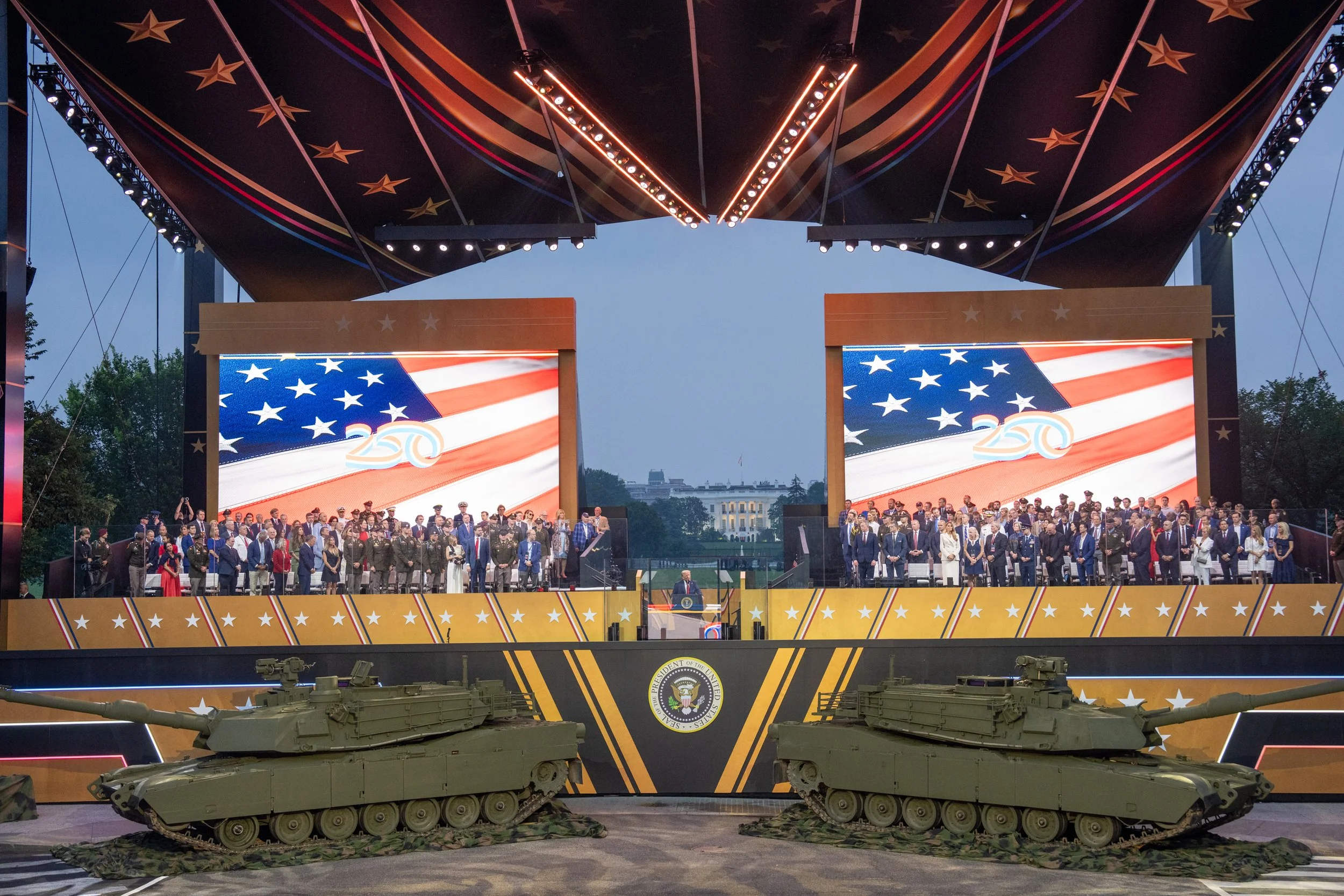
President Donald Trump, First Lady Melania Trump, Vice President JD Vance and Usha Vance attend the 250th Anniversary of the U.S. Army Grand Parade and Celebration, Saturday, June 14, 2025, in Washington, D.C. (Official White House Photo by Emily J. Higgins)
President Trump’s elaborate military parade on the Army’s 250th anniversary drew praise, protest, and scrutiny, raising questions about the balance between national pride and political performance.
Article by Stella Smith, Associate White House Correspondent
WASHINGTON - On June 14th, President Trump hosted a high-profile military parade in Washington D.C., commemorating the U.S. Army’s 250th anniversary – coincidentally falling on his 79th birthday. The event aligned with his long-held vision of a grand military display and stood as the most elaborate demonstration of such in decades.
The parade drew approximately 6,600 service members, 128 tanks, artillery units, and a flyover by more than 60 aircraft. The ceremony was led by President Trump, who took the stage to a 21-gun salute, proceeding to swear in 250 new recruits.
The White House celebrated the parade as an “iconic and grand celebration” of American heroism and anticipated it would inspire future generations to join the army ranks to serve their country. Officials had anticipated up to 200,000 spectators for the parade, though turnout was significantly lower than expected. Some attributed this was due to weather conditions, while others claimed public backlash and protest played a role.
While supporters praised this parade for honoring the Army’s 250-year legacy, critics denounced the event as politicized pageantry. The budget for this event ranged between $25 million and $45 million, drawing widespread scrutiny as it coincided with proposed cuts to Veterans Affairs funding and broader federal budget-cutting efforts.
In addition, this parade overlapped with the “No Kings” protests which broke out in over 2,000 U.S. cities that day, with demonstrators accusing President Trump of mimicking authoritarian regimes and using military forces for political gain. Many politicians, veterans, and analysts warned this parade blurred the line between military honor and partisan spectacle. Despite __ intended grandeur, some commentators said the parade lacked the visceral impact President Trump sought – logistical issues, weather delays, and unenthusiastic crowds left observers describing it as underwhelming.
Looking back, this 250th anniversary parade has come to represent different things depending on one’s perspective. To some, this was a necessary celebration of military legacy and national pride. To others, it was representative of an era where military symbolism becomes entangled with political theatre. In the end, whether the parade helps inspire future service or adds to growing concern about the role of military in politics, its legacy remains to be seen.