Military presence in the Caribbean has increased to confront drug trafficking
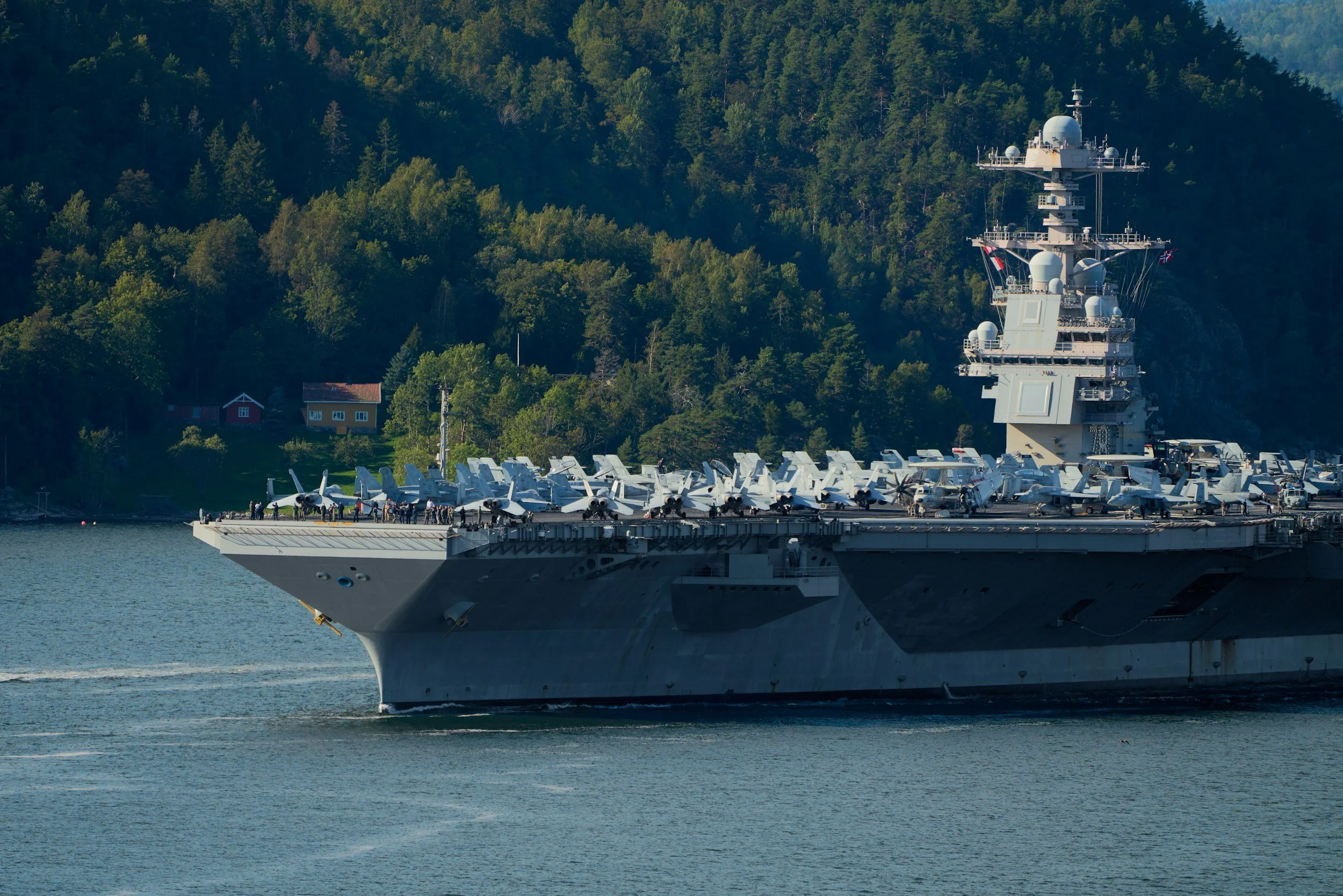
The situation remains precarious as Trump contemplates using further military force to confront drug trafficking across Latin America. (Vidar Nordli-Mathisen/Unsplash)
Tensions arise in Mexico, Colombia, and Venezuela as Trump proposes aggressive military tactics in response to drug trafficking.
Article by Abigail Gambla, Assistant Chief White House Producer
TRINIDAD AND TOBAGO - On Nov. 16, America’s largest aircraft carrier the USS Gerald R. Ford entered into the Caribbean alongside three guided missile destroyers. The military advancement into the region is part of Operation Southern Spear, an initiative set by the Trump Administration to combat drug-trafficking. Joint training exercises were taking place alongside the Trinidad and Tobago Defence Force (TTDF) on Trinidad, which is about seven miles away from the coast of Venezuela.
Since his inauguration, President Trump has targeted drug operations abroad in an effort to stop the smuggling of drugs into the United States. He has concentrated specifically on Mexico, Columbia, and Venezuela who he accuses of transporting drugs such as Fentanyl and Cocaine. So far, the administration has only used drone strikes as a means to attack alleged boats carrying drugs with nearly 83 people having been killed as a result of 22 strikes.
In recent interviews, Trump has alluded to using drone strikes in Mexico to limit drug distribution. “Would I launch strikes in Mexico to stop drugs? It’s okay with me. Whatever we have to do to stop drugs,” the president said in a press conference on Nov. 17.
He made similar comments about strikes in Colombia.“Columbia has cocaine factories where they make cocaine. Would I knock out those factories? I would be proud to do it personally. I didn’t say I’m doing it but I would be proud to do it because we would be saving millions of lives by doing it.” According to the US Drug Enforcement Administration, 90% of cocaine comes into the US from Columbia.
In regards to Venezuela, Trump appears to be taking a more direct approach by sending armed forces. He also accused the President of Venezuela Nicolas Maduro of being the leader of Cartel de los Soles, an organization involved in drug trafficking and illegal mining. The cartel was recently labelled a foreign terrorist organization, effective on Nov 24.
As Trump weighs military involvement in drug trafficking in Venezuela, he is also open to meeting with Maduro.
“Are you prepared to speak with him directly, commit to doing that before ordering strikes?” asked NBC News Senior White House Correspondent Garret Haake.
“I probably would talk to him,” responded Trump.
Leaders from the respective countries commented their thoughts on Trump’s aggressive response to drug trafficking in Venezuela.
“We are a country that always seeks peace, dialogue, and the resolutions of conflicts. We are not in favor of invasions. So if there is a chance that Mexico can help in any way, we will be there,” said the President of Mexico Claudia Sheinbaum.
The Colombian President, Gustavo Petro, voiced a separate viewpoint.
“It is undoubtedly an aggression against Latin America. All of this activity seems to be a transformation from the war on drugs to a matter of political and military control of Latin America by means of fear.” Colombia has cut ties with intelligence ties with the US. Petro currently has sanctions against him and his network by the US Treasury.
As tensions rise in the Caribbean, Maduro is publicly advocating for peace talks. He recently danced on stage to a “No war, yes peace” at a student day event in Caracas. In response to a question asked by CNN reporter Stefano Pozzobon on what he would say to Trump, he hoped to unite together and stop fighting. “No more endless wars, no more unjust wars, no more Libya, no more Afghanistan,” he told CNN. However, he appears to be mounting a guerrilla-style resistance to confront the US military if necessary.
The situation remains precarious as Trump contemplates using further military force to confront drug trafficking across Latin America.